
With Findstr, you replace WordPress’s native search with a powerful, almost plug-and-play WordPress search engine. A default results template is already provided and ready to use, and you can manage everything directly from the CMS to match your site and visual identity.

A ready-to-use template for your search results
Findstr provides a default WordPress search results template that works immediately. There’s nothing to configure to get started — your users enjoy a smooth, modern search experience right from the start, without touching any code.
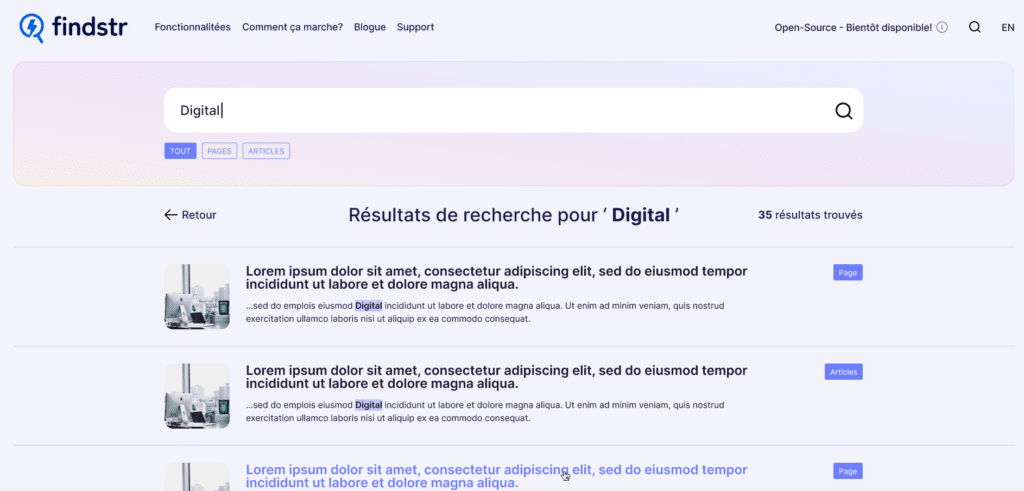

Easily customize the appearance from the CMS
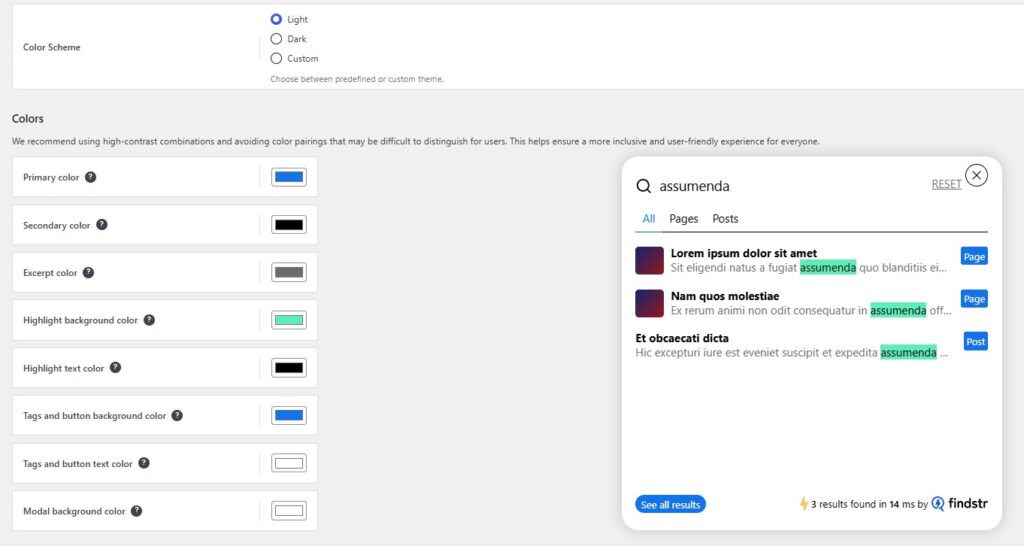
Even though the template is ready to use, you still have full control over the colors, fonts, and result settings. Whether it’s for the standard list or the search modal, you can adjust the style and content layout from your WordPress dashboard so everything integrates perfectly with your site.

Easily replace the native WordPress search
Findstr takes over WordPress’s native search with an optimized and customizable system. Users find what they’re looking for faster, and you provide an efficient, visually consistent, and easy-to-manage search engine that’s almost plug-and-play.

WordPress Search Experts





Frequently Asked Questions
Yes, you can upgrade your license at any time, and this can be done individually per INDEX. Simply click the Upgrade link in your account area and pay the price difference. This upgrade is not a renewal — your license will still expire on the same date.
Findstr is compatible with WordPress version 6.2 and above, as well as PHP 7.4 and later versions.
FacetWP does not natively provide text-based search. It is mainly focused on filters and requires an additional plugin like Relevanssi for full-text search, whereas Findstr handles both scenarios.
Additionally, FacetWP relies on WP Query to execute its filters, which runs through PHP, while Findstr uses JavaScript directly without using server resources.
Yes, Findstr allows you to create content catalogs (listings) either via code. Our team is currently working on implementing Gutenberg blocks to make displaying content catalogs easier.
